
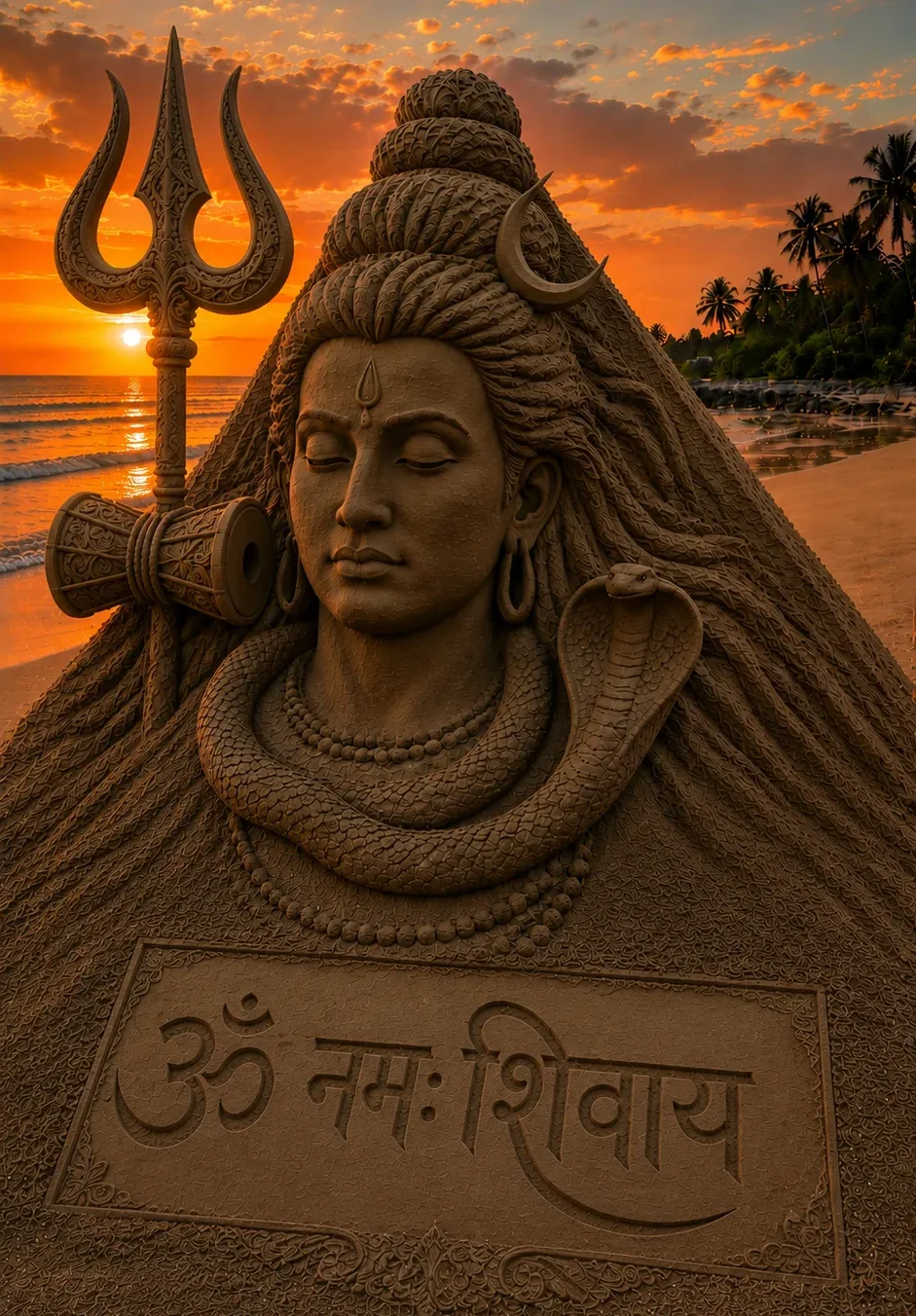
About the Shiv Chalisa
The Shiv Chalisa is a devotional hymn in praise of Lord Shiva, describing his divine form — the crescent moon on his brow, the Ganga flowing from his hair, the garland of skulls, and the tiger skin he wears. It recalls his great deeds: rescuing the gods from the demon Tarakasura, drinking the poison at the churning of the ocean (earning him the name Neelkanth), granting Bhagirath’s penance, and testing Lord Rama’s devotion with a thousand lotus flowers. Below you can read the complete chalisa in easy Roman-script transliteration, along with its meaning, benefits, and how to recite it.
Shiv Chalisa — Lyrics in English
॥Doha॥
Jai Ganesh Girija Suvan, Mangal Mool Sujan।
Kahat Ayodhyadas Tum, Dehu Abhay Vardan॥
॥Chaupai॥
Jai Girija Pati Deen Dayala।
Sada Karat Santan Pratipala॥
Bhal Chandrama Sohat Neeke।
Kanan Kundal Nagfani Ke॥
Ang Gaur Shir Gang Bahaye।
Mundmal Tan Kshar Lagaye॥
Vastra Khal Baghambar Sohe।
Chhavi Ko Dekhi Nag Man Mohe॥
Maina Matu Ki Have Dulari।
Baam Ang Sohat Chhavi Nyari॥
Kar Trishul Sohat Chhavi Bhari।
Karat Sada Shatrun Kshaykari॥
Nandi Ganesh Sohai Tahan Kaise।
Sagar Madhya Kamal Hain Jaise॥
Kartik Shyam Aur Ganrau।
Ya Chhavi Ko Kahi Jat Na Kau॥
Devan Jabahin Jay Pukara।
Tab Hi Dukh Prabhu Aap Nivara॥
Kiya Upadrav Tarak Bhari।
Devan Sab Mili Tumhin Juhari॥
Turat Shadanan Aap Pathayau।
Lavnimesh Mahan Mari Girayau॥
Aap Jalandhar Asur Sanhara।
Suyash Tumhar Vidit Sansara॥
Tripurasur San Yuddh Machai।
Sabahin Kripa Kar Leen Bachai॥
Kiya Tapahin Bhagirath Bhari।
Purab Pratigya Tasu Purari॥
Danin Mahan Tum Sam Kou Nahin।
Sevak Stuti Karat Sadahin॥
Ved Naam Mahima Tav Gai।
Akath Anadi Bhed Nahin Pai॥
Prakati Udadhi Manthan Mein Jwala।
Jarat Surasur Bhaye Vihala॥
Keenhi Daya Tahan Kari Sahai।
Neelkanth Tab Naam Kahai॥
Poojan Ramchandra Jab Keenha।
Jeet Ke Lank Vibhishan Deenha॥
Sahas Kamal Mein Ho Rahe Dhari।
Keenh Pareeksha Tabahin Purari॥
Ek Kamal Prabhu Rakheu Joi।
Kamal Nayan Poojan Chahan Soi॥
Kathin Bhakti Dekhi Prabhu Shankar।
Bhaye Prasann Diye Ichchhit Var॥
Jai Jai Jai Anant Avinashi।
Karat Kripa Sab Ke Ghatvasi॥
Dusht Sakal Nit Mohi Satave।
Bhramat Rahaun Mohi Chain Na Aave॥
Trahi Trahi Main Nath Pukaro।
Yehi Avsar Mohi Aan Ubaro॥
Lai Trishul Shatrun Ko Maro।
Sankat Se Mohi Aan Ubaro॥
Mata-Pita Bhrata Sab Hoi।
Sankat Mein Poochhat Nahin Koi॥
Swami Ek Hai Aas Tumhari।
Aay Harahu Mam Sankat Bhari॥
Dhan Nirdhan Ko Det Sada Hin।
Jo Koi Janche So Phal Pahin॥
Astuti Kehi Vidhi Karain Tumhari।
Kshamahu Nath Ab Chook Hamari॥
Shankar Ho Sankat Ke Nashan।
Mangal Karan Vighna Vinashan॥
Yogi Yati Muni Dhyan Lagavain।
Sharad Narad Sheesh Navavain॥
Namo Namo Jai Namah Shivay।
Sur Brahmadik Par Na Pay॥
Jo Yeh Path Kare Man Lai।
Ta Par Hot Hai Shambhu Sahai॥
Rinniyan Jo Koi Ho Adhikari।
Path Kare So Pavan Hari॥
Putra Heen Kar Ichchha Joi।
Nishchay Shiv Prasad Tehi Hoi॥
Pandit Trayodashi Ko Lave।
Dhyan Poorvak Hom Karave॥
Trayodashi Vrat Karai Hamesha।
Take Tan Nahin Rahai Kalesha॥
Dhoop Deep Naivedya Chadhave।
Shankar Sammukh Path Sunave॥
Janm Janm Ke Paap Nasave।
Ant Dham Shivpur Mein Pave॥
Kahain Ayodhyadas Aas Tumhari।
Jani Sakal Dukh Harahu Hamari॥
॥Doha॥
Nitya Nem Kar Prataha Hi, Path Karaun Chalisa।
Tum Meri Manokamna, Poorna Karo Jagdish॥
Magsar Chhathi Hemant Ritu, Samvat Chausath Jaan।
Astuti Chalisa Shivahi, Poorna Keen Kalyan॥
Meaning of the Shiv Chalisa
The Shiv Chalisa opens by describing Lord Shiva’s divine form — the crescent moon on his brow, the Ganga flowing through his hair, the garland of skulls, and the tiger-skin garment. It celebrates his household life with Goddess Parvati and recalls his great deeds: destroying the demon Tarakasura who tormented the gods, drinking the poison that emerged from the churning of the ocean (earning him the name Neelkanth), granting Bhagirath’s long penance, and testing Lord Rama’s devotion by hiding one of a thousand lotus flowers. The later verses are a heartfelt prayer — the devotee, troubled by hardship, cries out to Shiva for protection, forgiveness, and relief from sorrow, closing with a promise that whoever recites this chalisa with devotion finds Shiva’s grace and their sins washed away.
Benefits of Reciting the Shiv Chalisa
- Regular recitation is believed to remove fear, sorrow, and obstacles from life.
- Reciting on Mondays and during Shravan month is considered especially auspicious.
- The text itself recommends reciting on Trayodashi (the 13th lunar day) with a vrat, for lasting peace.
- It is believed to bless devotees with prosperity and fulfil sincere wishes.
🪔 How to Recite the Shiv Chalisa
- Bathe in the morning and wear clean clothes.
- Light a lamp before the Shiv Linga or an image of Lord Shiva.
- Offer bel patra, white flowers, and water (Ganga jal if available).
- Offer dhoop, deep, and naivedya (incense, lamp, and a food offering) as described in the chalisa itself.
- Recite the Shiv Chalisa daily with a calm and devoted mind.
Read also: Shiv ji Aarti (in English)
Frequently Asked Questions
Who wrote the Shiv Chalisa?
This version of the Shiv Chalisa is attributed to Ayodhyadas, as mentioned in its own closing verses.
When should the Shiv Chalisa be recited?
It can be recited daily, ideally in the morning; Mondays, Shravan month, and Trayodashi are considered especially auspicious.
What are the benefits of reciting the Shiv Chalisa?
It is believed to remove fear and sorrow, fulfil sincere wishes, and bring the protective grace of Lord Shiva.