
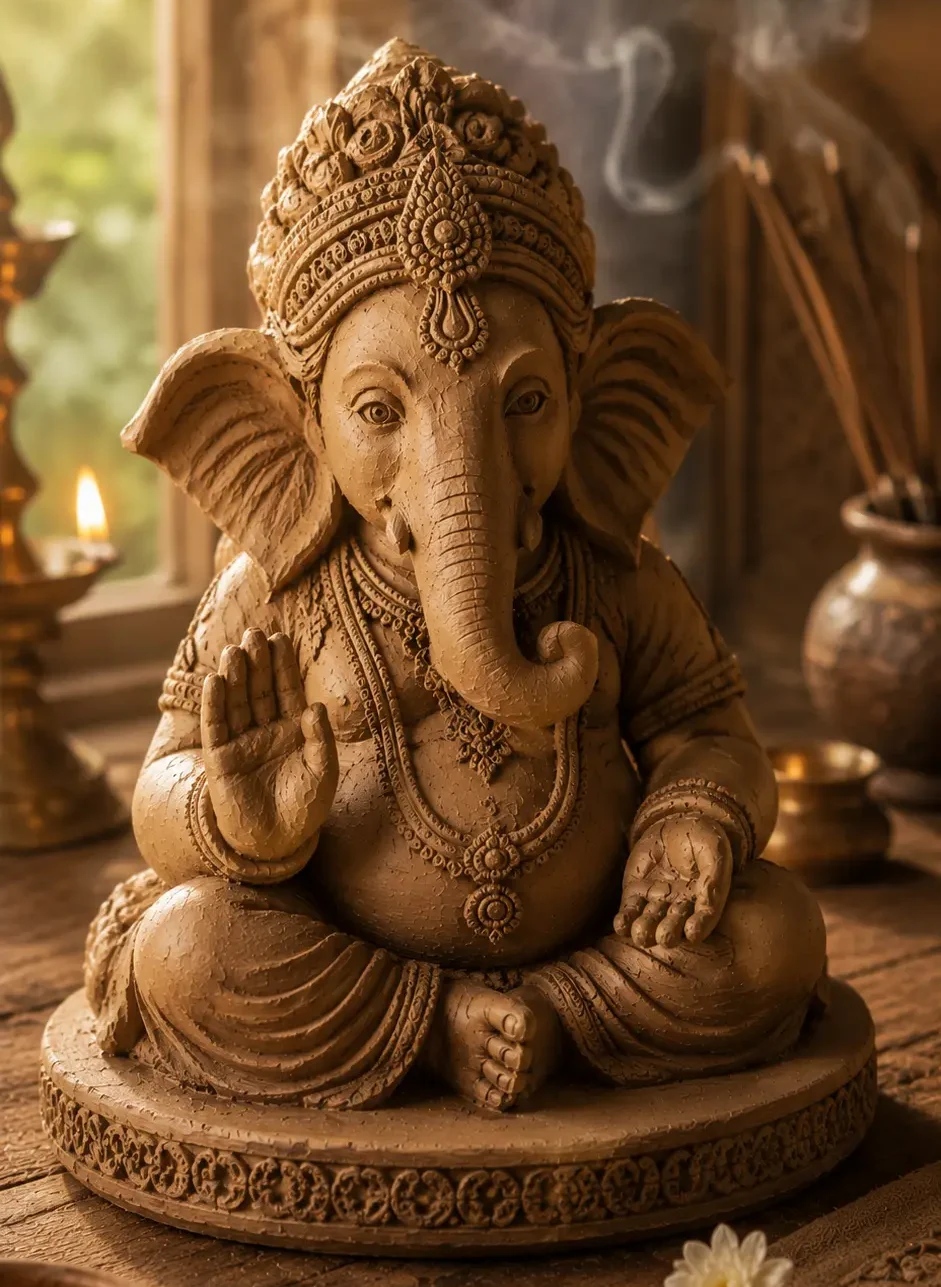
About the Ganesh Chalisa
The Ganesh Chalisa is a devotional hymn in praise of Lord Ganesh, the remover of obstacles and the first deity worshipped before any auspicious task. This version tells the beautiful story of Ganesh’s birth to Goddess Parvati, how Lord Shani’s inauspicious glance caused the infant to lose his head, how Lord Vishnu restored him with the head of an elephant, and how young Ganesh won the title of “first among the gods” by wisely circling his parents instead of the world. Below you can read the complete chalisa in easy Roman-script transliteration, along with its meaning, benefits, and how to recite it.
Ganesh Chalisa — Lyrics in English
॥ Doha ॥
Jai Ganpati Sadgun Sadan, Kavivar Badan Kripal।
Vighna Haran Mangal Karan, Jai Jai Girijalal॥
॥ Chaupai ॥
Jai Jai Jai Ganpati Ganrajoo।
Mangal Bharan Karan Shubha Kajoo॥
Jai Gajbadan Sadan Sukhdata।
Vishwa Vinayaka Buddhi Vidhata॥
Vakra Tund Shuchi Shund Suhavna।
Tilak Tripund Bhal Man Bhavan॥
Rajat Mani Muktan Ur Mala।
Swarn Mukut Shir Nayan Vishala॥
Pustak Pani Kuthar Trishulam।
Modak Bhog Sugandhit Phoolam॥
Sundar Peetambar Tan Sajit।
Charan Paduka Muni Man Rajit॥
Dhani Shiv Suvan Shadanan Bhrata।
Gauri Lalan Vishwa-Vikhyata॥
Riddhi-Siddhi Tav Chanvar Sudhare।
Mushak Vahan Sohat Dware॥
Kahau Janm Shubh Katha Tumhari।
Ati Shuchi Paavan Mangalkari॥
Ek Samay Giriraj Kumari।
Putra Hetu Tap Keenha Bhari॥
Bhayo Yagya Jab Poorna Anoopa।
Tab Pahunchyo Tum Dhari Dwij Roopa॥
Atithi Jani Ke Gauri Sukhari।
Bahuvidhi Seva Kari Tumhari॥
Ati Prasann Havai Tum Var Deenha।
Matu Putra Hit Jo Tap Keenha॥
Milahi Putra Tuhi, Buddhi Vishala।
Bina Garbha Dharan Yahi Kala॥
Gannayak Gun Gyan Nidhana।
Poojit Pratham Roop Bhagwana॥
As Kahi Antardhan Roop Havai।
Palna Par Balak Swaroop Havai॥
Bani Shishu Rudan Jabahin Tum Thana।
Lakhi Mukh Sukh Nahin Gauri Samana॥
Sakal Magan, Sukhmangal Gavahin।
Nabh Te Suran, Suman Varshavahin॥
Shambhu, Uma, Bahudan Lutavahin।
Sur Munijan, Sut Dekhan Aavahin॥
Lakhi Ati Anand Mangal Saja।
Dekhan Bhi Aaye Shani Raja॥
Nij Avgun Guni Shani Man Mahin।
Balak, Dekhan Chahat Nahin॥
Girija Kachhu Man Bhed Badhayo।
Utsav Mor, Na Shani Tuhi Bhayo॥
Kahat Lage Shani, Man Sakuchai।
Ka Karihau, Shishu Mohi Dikhai॥
Nahin Vishwas, Uma Ur Bhayoo।
Shani Son Balak Dekhan Kahayoo॥
Padatahin Shani Drig Kon Prakasha।
Balak Sir Udi Gayo Akasha॥
Girija Giri Vikal Havai Dharani।
So Dukh Dasha Gayo Nahin Varani॥
Hahakar Machyau Kailasha।
Shani Keenhon Lakhi Sut Ko Nasha॥
Turat Garud Chadhi Vishnu Sidhayo।
Kati Chakra So Gaj Sir Laaye॥
Balak Ke Dhad Oopar Dharayo।
Pran Mantra Padhi Shankar Darayo॥
Naam Ganesh Shambhu Tab Keenhe।
Pratham Poojya Buddhi Nidhi, Var Deenhe॥
Buddhi Pareeksha Jab Shiv Keenha।
Prithvi Kar Pradakshina Leenha॥
Chale Shadanan, Bharmi Bhulai।
Rache Baith Tum Buddhi Upai॥
Charan Matu-Pitu Ke Dhar Leenhen।
Tinke Saat Pradakshin Keenhen॥
Dhani Ganesh Kahi Shiv Hiye Harshe।
Nabh Te Suran Suman Bahu Barse॥
Tumhari Mahima Buddhi Badai।
Shesh Sahasmukh Sake Na Gai॥
Main Matiheen Maleen Dukhari।
Karahoon Kaun Vidhi Vinay Tumhari॥
Bhajat Ramsundar Prabhudasa।
Jag Prayag, Kakra, Durvasa॥
Ab Prabhu Daya Deena Par Keejai।
Apni Shakti Bhakti Kuchh Deejai॥
॥ Doha ॥
Shri Ganesh Yah Chalisa, Path Karai Kar Dhyan।
Nit Nav Mangal Grih Basai, Lahe Jagat Sanman॥
Sambandh Apne Sahastra Dash, Rishi Panchami Dinesh।
Pooran Chalisa Bhayo, Mangal Moorti Ganesh॥
Meaning of the Ganesh Chalisa
This chalisa tells the well-loved story of Lord Ganesh’s birth. Goddess Parvati performed great penance for a son, and Ganesh appeared to her disguised as a Brahmin guest, blessing her with a child of great wisdom. When the infant was born, all the gods came to see him but Lord Shani (Saturn), fearing his own inauspicious gaze, hesitated to look. Persuaded by Parvati, Shani finally glanced at the child, and his powerful gaze caused the infant’s head to vanish. In the grief that followed, Lord Vishnu flew in on Garuda and brought the head of an elephant, restoring the child to life and thus he became Ganesh, “elephant-faced,” first among the gods to be worshipped. The chalisa also recounts how young Ganesh proved his wisdom: when challenged to circle the entire world, he simply circled his parents, declaring them his whole world and won the title of Pratham Poojya, the one worshipped first before any undertaking.
Different Puranic Versions of This Story
The story of Lord Ganesh’s birth and how he received his elephant head appears in different forms across the Puranas. The well-known account in the Shiva Purana tells how Ganesh, guarding the door on Mother Parvati’s instruction, came into conflict with Lord Shiva, who then severed his head. The Brahmavaivarta Purana (Ganapati Khanda), on the other hand, describes how the infant’s head was lost when Lord Shani’s powerful gaze fell upon him. Both accounts are accepted within Puranic tradition — this chalisa follows the Brahmavaivarta version. In both stories, Lord Vishnu ultimately restores the child to life with the head of an elephant.
Benefits of Reciting the Ganesh Chalisa
- Regular recitation is believed to remove obstacles and bring auspicious beginnings.
- Reciting before starting any new work, journey, or venture is considered especially fruitful.
- It is believed to bring wisdom, prosperity, and honour into the household.
🪔 How to Recite the Ganesh Chalisa
- Bathe in the morning and wear clean clothes.
- Light a lamp before an image or idol of Lord Ganesh.
- Offer red flowers, durva grass, and modak or laddoo as prasad.
- Recite the Ganesh Chalisa with a calm and focused mind.
- Conclude with the Ganesh Aarti and distribute the prasad.
Read also: Ganesh Aarti (in English)
Frequently Asked Questions
Why does Lord Ganesh have an elephant head?
According to this chalisa, when Lord Shani’s inauspicious glance caused the infant’s head to vanish, Lord Vishnu restored him to life with the head of an elephant.
Why is Ganesh worshipped first?
Ganesh won the title of Pratham Poojya (first to be worshipped) by wisely circling his parents instead of the world, showing that they mean more to him than anything else.
When should the Ganesh Chalisa be recited?
It can be recited daily, and is especially recommended before beginning any new task, journey, or important work.