
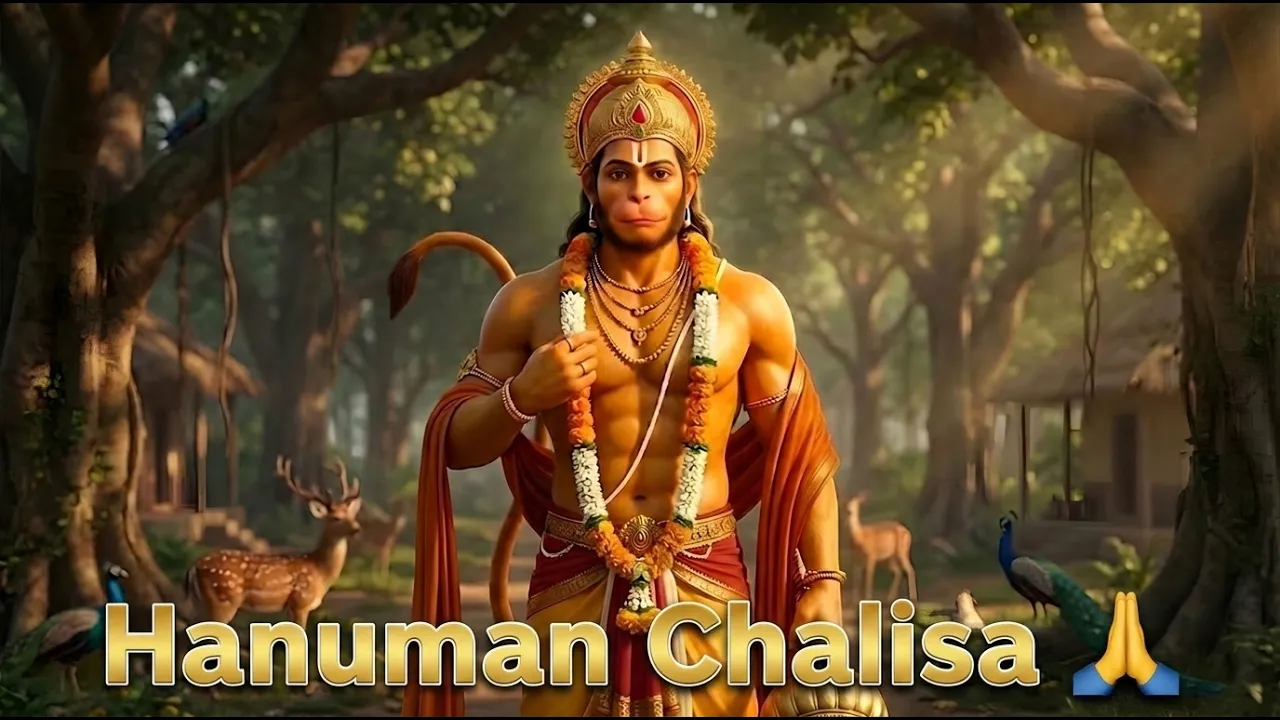
About the Hanuman Chalisa
The Hanuman Chalisa is one of the most beloved and powerful devotional hymns dedicated to Lord Hanuman, composed by the great saint Goswami Tulsidas in the Awadhi language. It contains two dohas (couplets) and forty chaupais (verses) that praise Hanuman’s strength, wisdom, devotion, and boundless glory. It is believed that reciting the Hanuman Chalisa daily removes fear, obstacles, and negative energies, and grants courage, confidence, and divine grace. Below you can read the complete Hanuman Chalisa in easy Roman-script (English) transliteration, along with its meaning, benefits, and the proper way to recite it.
Hanuman Chalisa — Lyrics in English
॥ Doha ॥
Shri Guru Charan Saroj Raj, Nij Manu Mukur Sudhaari।
Barnau Raghubar Bimal Jasu, Jo Dayaku Phal Chaari॥
Buddhiheen Tanu Jaanike, Sumirau Pavan Kumaar।
Bal Buddhi Vidya Dehu Mohi, Harahu Kalesh Vikaar॥
॥ Chaupai ॥
Jai Hanuman Gyan Gun Sagar। Jai Kapees Tihun Lok Ujagar॥
Ram Doot Atulit Bal Dhama। Anjani-Putra Pavansut Nama॥
Mahabir Bikram Bajrangi। Kumati Nivar Sumati Ke Sangi॥
Kanchan Baran Biraj Subesa। Kanan Kundal Kunchit Kesa॥
Hath Bajra Au Dhwaja Biraaje। Kaandhe Moonj Janeu Saaje॥
Shankar Suvan Kesari Nandan। Tej Pratap Maha Jag Bandan॥
Vidyavaan Guni Ati Chatur। Ram Kaj Karibe Ko Aatur॥
Prabhu Charitra Sunibe Ko Rasiya। Ram Lakhan Sita Man Basiya॥
Sukshma Roop Dhari Siyahi Dikhava। Bikat Roop Dhari Lank Jarava॥
Bhim Roop Dhari Asur Sanhare। Ramchandra Ke Kaj Sanvare॥
Laay Sanjivan Lakhan Jiyaye। Shri Raghubir Harashi Ur Laaye॥
Raghupati Kinhi Bahut Badai। Tum Mam Priya Bharat-hi Sam Bhai॥
Sahas Badan Tumharo Jas Gaave। Asa-kahi Shripati Kanth Lagaave॥
Sankadik Brahmadi Muneesa। Narad Sarad Sahit Aheesa॥
Jam Kuber Digpal Jahan Te। Kabi Kobid Kahi Sake Kahan Te॥
Tum Upkar Sugreevahi Kinha। Ram Milaay Raj Pad Dinha॥
Tumharo Mantra Vibhishan Maana। Lankeshwar Bhaye Sab Jag Jaana॥
Jug Sahastra Jojan Par Bhanu। Leelyo Tahi Madhur Phal Jaanu॥
Prabhu Mudrika Meli Mukh Maahi। Jaladhi Laanghi Gaye Achraj Naahi॥
Durgam Kaj Jagat Ke Jete। Sugam Anugraha Tumhare Tete॥
Ram Duaare Tum Rakhvare। Hot Na Aagya Binu Paisare॥
Sab Sukh Lahai Tumhari Sarna। Tum Rakshak Kahu Ko Dar Na॥
Aapan Tej Samharo Aapai। Teenon Lok Haank Te Kaanpai॥
Bhoot Pisach Nikat Nahi Aavai। Mahabir Jab Naam Sunavai॥
Nase Rog Harai Sab Peera। Japat Nirantar Hanumat Beera॥
Sankat Te Hanuman Chudavai। Man Kram Bachan Dhyan Jo Lavai॥
Sab Par Ram Tapasvi Raja। Tin Ke Kaj Sakal Tum Saja॥
Aur Manorath Jo Koi Lavai। Soi Amit Jeevan Phal Pavai॥
Charon Jug Partap Tumhara। Hai Parsiddha Jagat Ujiyara॥
Sadhu Sant Ke Tum Rakhvare। Asur Nikandan Ram Dulare॥
Ashta Siddhi Nau Nidhi Ke Data। As Bar Deen Janki Mata॥
Ram Rasayan Tumhare Pasa। Sada Raho Raghupati Ke Dasa॥
Tumhare Bhajan Ram Ko Pavai। Janam Janam Ke Dukh Bisravai॥
Antkaal Raghubar Pur Jai। Jahan Janam Hari-Bhakt Kahai॥
Aur Devta Chitt Na Dharai। Hanumat Sei Sarb Sukh Karai॥
Sankat Katai Mitai Sab Peera। Jo Sumirai Hanumat Balbeera॥
Jai Jai Jai Hanuman Gosai। Kripa Karahu Gurudev Ki Nai॥
Jo Sat Bar Path Kar Koi। Chhutahi Bandi Maha Sukh Hoi॥
Jo Yah Padhai Hanuman Chalisa। Hoy Siddhi Sakhi Gaurisa॥
Tulsidas Sada Hari Chera। Kije Nath Hriday Mahn Dera॥
॥ Doha ॥
Pavan Tanay Sankat Haran, Mangal Murati Roop।
Ram Lakhan Sita Sahit, Hriday Basahu Sur Bhoop॥
Meaning of the Hanuman Chalisa
In the opening couplets, Tulsidas bows to the lotus feet of his Guru and prays to Hanuman for strength and wisdom. The forty verses that follow describe Hanuman as the son of the wind (Pavanputra), the devoted messenger of Lord Rama, immensely powerful, and the remover of all troubles. The Chalisa recalls his heroic deeds from the Ramayana — such as carrying the Sanjivani mountain to save Lakshmana and burning Lanka — and celebrates his role as the protector of devotees. In the closing verses, the devotee prays for Hanuman to dwell in their heart forever. In essence, the Hanuman Chalisa is a message of devotion, surrender, and fearlessness.
Benefits of Reciting the Hanuman Chalisa
- Regular recitation removes fear and anxiety and brings peace of mind.
- Reciting it on Tuesdays and Saturdays is considered especially auspicious.
- Chanting before exams, travel, or difficult times boosts courage and confidence.
- It is believed to reduce the effect of negative energy and evil influences.
🪔 How to Recite the Hanuman Chalisa
- Bathe in the morning and wear clean clothes.
- Light a lamp (ghee or oil) before an image or idol of Hanuman.
- Offer red flowers, sindoor (vermilion), and a prasad of jaggery and gram (gud-chana).
- Recite the Hanuman Chalisa with a calm mind — 1, 7, or 11 times.
- Conclude with the Hanuman Aarti and share the prasad.
Frequently Asked Questions
Who wrote the Hanuman Chalisa?
The Hanuman Chalisa was composed by the saint-poet Goswami Tulsidas in the Awadhi language.
How many verses does the Hanuman Chalisa have?
It has two dohas (couplets) and forty chaupais (verses) — hence the name “Chalisa,” from “chaalis” meaning forty.
When should the Hanuman Chalisa be recited?
It can be recited daily, in the morning or evening; Tuesdays and Saturdays are considered especially auspicious.